Showing posts with label Auto Maintenance. Show all posts

10/13/16

Timing Belts, the Nitty-Gritty


Timing belts - The Nitty-Gritty

Oh, no! My belt just broke! Will my pants fall down? Good news: No! 

What is a timing belt, anyway? First of all, a timing belt is a source of mystery to many folks. They find themselves wondering, "Does my car have a timing belt? Where is it located? When should it be replaced? What happens if I don’t replace it? If I don’t have one, what do I have?" 

The timing belt is one of many crucial parts of the engine. It is a black, circular rubber belt, with a specific number of teeth.  The belt’s teeth are turned by gears which also have a specific (but different) number of teeth. This causes the belt to turn the internal engine parts together in synchronicity. It ‘times’ the internal moving parts of the engine and keeps the valves from hitting the pistons. It also makes sure the fuel, air and spark are delivered at the proper times to make the engine run. Some belts turn oil pumps and coolant pumps. There are even cars that have more than one timing belt. The belt moves, turning the gears, which in turn, turn other internal engine parts.

Some vehicles do not have a timing belt (mostly found in older cars), but all engines must be 'timed'. This is accomplished by different methods, such as a timing chain, or by gears. 

Why not wait until it breaks – then replace it? Because, although your pants won't fall down when your belt breaks, the car’s engine will stop running. That's right. Your car will stop. Believe me; this type of event never happens at the perfect place or the perfect time. (For example: Anywhere on Highway 17.)

What symptoms indicate that my belt may break soon? Bad news: there are no warning signs. Timing belts do not normally make noise or give any other warning prior to breaking.

When should I replace my timing belt? Recommended maintenance intervals for the timing belt vary (from 60,000 to 105,000 miles) depending on manufacturer and type of engine. Most belts last for their designated lifetime – as long as all related components last, including belt tensioner(s), idler pulley(s), water pump, and miscellaneous oil seals. In other words, the components related to the belt need servicing and/or replacing at the same time the belt is replaced. Otherwise, the new belt may fail prematurely due to oil contamination or just mechanical failure. Yes, it is important to repair those oil leaks!

I did not do this maintenance, my belt broke and my car stopped. What's the big deal? Once it breaks other dreadful things can happen. For example, if your car has an "interference engine", the pistons hit the valves - causing them to bend; bent valves = broken engine = big dent in pocket book. Your entire engine will require dis-assembly and all the parts that got bent will need to be replaced. 

Water Star Motors recommends that you avoid this potential major engine repair by attending to regular maintenance: simply replace your timing belt according to the recommended schedule. And save hundreds of dollars in potential future labor costs by having the related components serviced at the same time a new belt is installed!

I need to find out about my timing belt! What now? Call your local professional auto repair shop like Water Star Motors 831-457-0996. We look forward to researching your needs and providing you with the information and service that will resolve your automotive problem(s). 


9/23/14

Running Like New

From Residue to Running Like New
How a Fuel System Cleaning Can Restore Your Engine

Whether you put too much food down the garbage disposal (we prefer composting), too many leaves fall into the gutters or grandma's famous tuna casserole left your oven covered in an unknown greasy substance, things stop performing at their optimal level unless they're cleaned. The same is true for your car's engine.

Residue gets left behind in your engine every time you turn off your car. Any time an engine shuts down, it goes through a 'hot soak'. A hot soak is when your engine is still producing heat and there is no air flowing through it to cool it down. During the 'hot soak' period, fuel residues become thin deposits called gum and varnish. with time, these this residues accumulate and bake into rock-hard carbon deposits, which can be very difficult to remove.

The hard carbon deposits cause a multitude of problems with engines. these include hard starts, stumbling, loss of fuel economy, increased emissions and reduced performance.

To unclog your gutters, all you need to do is remove the leaves, use some oven cleaner to remove the mystery grease from your oven. But how to clean the deposits from your engine? Regular fuel system cleaning as a preventive maintenance can address the fuel deposit-related problems before they require expensive repairs, including engine dis-assembly and part replacements. 

Our favorite product is BG 44K Fuel System Cleaner. We recommend using it annually (12,000-
15,000 miles). It is a standard part of our maintenance services for our customers. This is poured into your fuel tank (good to have a full tank)and as your car runs, the product will clean throughout, helping to remove those harsh deposits and improving vehicle performance.

There are no negative side effects what so ever when you use a quality fuel system cleaner. We also carry a BG fuel System cleaner for diesels as well. (By the way, BG can only be purchased through auto repair facilities.) 

Click here for your appointment today. Your Serene, Green Auto Repair Team www.WaterStarMotors.com

8/12/14

Being 'Cool' Again

Coolant System Explained (Part two of two)


Last week we discovered a pool of ‘green blood’ under the car…Is it an Alien’s? 


As we learned in Coolant System Part 1, that "green stuff" is not some weird alien blood (although to some, a car may seem like an alien)! It is anti-freeze – also known as coolant.

What does Coolant do? Coolant performs a number of important roles in keeping your vehicle on the road. Its primary function is to cool engine parts around the cylinder walls and cylinder head where your car’s fuel is burned; that is, where combustion takes place. The engine needs coolant circulating through it continually; without it, the combustion chambers reaches temperatures over 2,500 degrees Fahrenheit (RED HOT, in other words).

Its secondary responsibilities are to heat the inside of your car (via the heater) and to keep corrosion from forming in the radiator, engine, and heater core.

How does the coolant circulate? Coolant is kept moving along by a pump (misnamed as ‘the water pump’). A well-functioning water pump is essential because, as you know, idle coolant is the devil’s playground! (HOT, HOT, HOT!) J

As coolant (designed to not boil until it reaches 250 degrees Fahrenheit) circulates through the engine, it carries heat away from the cylinder walls / combustion chambers to the radiator. The anti-freeze cools down as it flows through the radiator. It then repeats its cycle of flow - back to the cylinder walls, picking up the heat to expel once again to the radiator.

The thermostat is what regulates the coolant temperature by controlling how fast and where the coolant goes, maintaining the cooling system's proper temperatures at a cool 190-200 degrees.

Needless to say, the cooling system needs to be kept in good working order: coolant performs essential roles in keeping your vehicle on the road and comfortable (warm and toasty). Proper maintenance is required.

Water Star Motors recommends that you repair all leaks immediately, take care of your water pump, and REPLACE COOLANT every 2-3 years. (As exotic as it is, and although some coolant is advertised as lasting for up to ten years, coolant has a relatively short life span; experience tells me that 5 years is max and 2-3 years is best.) A good, professional "Coolant System Flush" – replacing the entire contents of the cooling system – is a great investment for your car’s health.

[Please note: many kinds of coolants cannot be mixed with other kinds. Be sure to consult a professional if you are not absolutely certain what kind your car currently has. Also, please be aware that in the world of cars, things are constantly changing – including the color of coolants; they now come not only in green, but red, orange, blue, and even purple!]

In closing: We highly recommend regular ‘green blood’ transfusions for your 'Alien' – that is, regular cooling system maintenance – to promote long life and happiness.

And no, even though it may bleed ‘green blood’, your car really is not an Alien; you can think of it as just having a preference for green ‘cool-aide’.

Click for your appointment today. Your Serene, Green Auto Repair Team - Water Star Motors

8/5/14

How 'Cool' are you?

Coolant System Explained (Part one of two)


Do not open radiator cap when hot
There’s a pool of ‘green blood’ under my car…Is it an Alien’s?...Should I be concerned?

Imagine; you've finished your food shopping, go out to put your groceries in your car and you notice a small river of green liquid oozing from underneath. “Yikes! Is that green stuff coming from my car???”

That "green stuff" is not some weird alien blood (although to some, a car may seem like an alien)! It is anti-freeze – AKA coolant.

GET THAT LEAK FIXED right away if you are concerned about keeping your car running, and  or about keeping the environment and  or animals safe! The loss of coolant often leads to overheating of your vehicle’s engine.

Coolant smells and tastes sweet. We DO NOT recommend tasting your coolant – NEVER taste it – but you need to know that animals are attracted to the sweetness of spilled coolant, and it can potentially cause their demise if they drink it. (A "pet-and-environment-friendly coolant" is available. It is also green in color – and a bit pricey.)

While we have established that the "green stuff" is not alien blood, you also need to know that it is not merely colored water. Appearance can be deceiving! Handle it carefully. Coolant is made with ethylene and propylene glycols that are manufactured from natural gas and crude petroleum (non-renewable resources). It has additives such as corrosion inhibitors, ph buffers, and anti-foaming agents. Without all those additives, coolant cannot do all of its jobs well.

Besides being poisonous in and of itself, coolant becomes increasingly toxic while circulating in your car, as it then is contaminated with heavy metals such as lead, cadmium, chromium, iron, copper and zinc.
Water Star Motors has all used coolant picked up to be recycled! This recycling process is regulated by standards set by the automotive industry.

Helpful tip: DO NOT open the radiator cap on a car with a hot or overheating engine…the coolant is under pressure and could scald you.

Coolant can also leak into the interior of the car (on the floor by the passenger’s feet) if a leak develops in the heater core.

Side Note: During the hot season when the car’s air conditioning is being used there will often be clear water found under the car. This is the condensation from the air conditioning unit removing the moisture out of the car’s interior. Do not panic, this is normal.

Stay tuned –Coolant System Part 2 will be in the next Rock, Paper, Car.

Click for your appointment today. Your Serene, Green Auto Repair Team - Water Star Motors

7/31/14

Trouble Free Summer Travel

Summer is here and we love to travel to ‘hot’ places with our families. For example; there is much desert to be crossed to get to the Grand Canyon.

No one wants to get caught with the hood up on the side of the road. This tends to raise the temperatures of more than the vehicle. Before your trip we suggest checking your vehicle with a pre-trip inspection. Ideally do this a week or two before your scheduled departure date. Special attention should be made to the Cooling System and the Air Conditioning System.

Quick Factoid: Summer heat can send parts of your engine to nearly 200 degrees F – some engine bits can even reach 500 degrees, literally oven hot! NEVER open the radiator cap on a hot engine! Over- heating or not, the system has a lot of pressure in it. (Old Faithful is best viewed from a distance.)

The easiest way for you to determine if your car is cooling properly is to get in the habit of looking at your car’s temperature gauge. This simple act can save you a lot of time, aggravation and money. Take a look at the gauge when it is cold and as it warms up. As you head to your destination take a look while sitting at a stop. If you notice it rising close to the red, safely pull over and stop your car immediately. It is not uncommon for thermostats to fail overnight. When this happens the car will overheat almost instantly.

Let’s say your temperature gauge is fluctuating. This could be due to a poor connection or faulty ground wire. When your temperature gauge is riding higher than usual the following should be checked: Radiator cap, the radiator itself for leaks or resistance to flow, all water hoses, water pump, the fan clutch, thermostat, auxiliary fan, etc.

The best defense in possible overheating situations is a good offense. Have your car serviced regularly; follow the recommendation of getting coolant flushes every two years. Watch your gauges. Turn off your air conditioner while driving up steep grades.
Replacing a bad hose or radiator is much cheaper than replacing a cylinder head or engine block. 


Cooling System Overview: The cooling system removes excess heat from the engine, keeps the engine operating at its most efficient temperature and gets the engine up to the correct operating temperature as soon as possible after starting. As fuel is burned about one third of the energy is converted into power, another third goes out the exhaust unused and the final third becomes heat energy. Without a cooling system, parts would melt, and the engine's pistons would expand so much they would seize the motor.

If the engine runs too cool it is inefficient, the oil gets dirty (adding wear and subtracting horsepower), carbon deposits form and fuel mileage is poor. Also, in some newer cars, this could cause the check engine light to come on.

Click for your appointment today. Your Serene, Green Auto Repair Team - WaterStarMotors.com

4/24/13

Air Filters Part 1 of 2

Air Filters Part 1 of 2

BREATHING - good for you and good for your car.

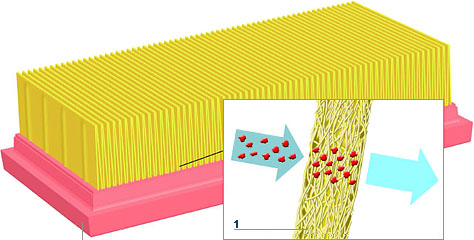
The function of an air filter is similar to that of the hairs in your nose. They filter out dust and dirt particles, pollutants, etc. before the air flows into the engine. Air flows from the air filter through the intake manifold into the engine where it mixes with the fuel. The ‘stoichiometric formula’refers to the optimum air to fuel ratio: 14.7 parts of air to every one part of fuel. That is a lot of air.

Do all cars have filters? Yes! Old cars – 1960’s and below had oil bath filters. Now cars have dry paper filters which look like mini accordions.

How often should I replace my air filter? Depending on driving conditions, your air filter should be replaced every 10,000 to 30,000 miles. Clean, high-quality air filters ensure full engine performance. They clean the intake air reliably and are resistant to humidity, heat, oil and air pulsations in the intake process. Timely air filter replacement pays off. With new air filters, fuel consumption can be reduced by up to 10%.

Besides using more fuel (pain at the pump), cars with plugged air filters also create more emissions at the tail pipe. The overall performance is negatively affected. The worse case scenario would be that the filter becomes so dirty that the dirt escapes into the engine causing engine damage. Clean air filters prolong engine life. Similarly, people with emphysema (lung problem) do not operate at their full capacity. Second worse scenario, it could actually stop your car from running.
I've seen worse


Imagine the road conditions your car has to put up with. There is dirt and trash on the roads which gets whipped around by the vehicle in front of yours. Then your car gets to breathe it all in. We've seen candy wrappers, paper, wood, dirt, leaves, pine needles, etc. lodged in people’s old air filters.

Garaged cars will occasionally find rodents who have deemed the air filter as the best place to start a family or camp out. They bring acorns, dog food, cozy shredded paper…all of the amenities of a happy rat or mouse, into the air filter and housing. One real problem that can occur in this circumstance is a horrific smell if the critter dies somewhere in your car. Ugh!

There is a product on the market called K/N high performance lifetime air filters for cars, trucks, and motorcycles. Initially they are more expensive, but they are designed to last a million miles and with better air flow. They are made with 4-6 sheets of cotton gauze layered between two sheets of aluminum wire mesh. This media is then pleated and oiled. It is recommended to wash and re-oil once every 50,000 miles. We mention this product because of our Green stance we take in our business. Imagine the positive impact on our landfills if every car in the world converted to a lifetime air filter during regular maintenance. 

Stay tuned to the next edition of Rock, Paper, Car where we will talk about Cabin Air Filters.

4/5/13

Funny Wall Mural


Men's Restroom Mural
Read before looking at picture...
Edge Designs is an all-women run company
That designs interior office space They had an opportunity to do an office project in
NYC.

The client allowed the women of this
Company a free hand in all design aspects.
The client was a company that was also
Run by all women execs.............


The result ..........well.....We all know that Men never talk, never look at each other....
And never laugh much in the restroom....
The men's room is a serious and quiet place...
But now...with the addition of one mural
On the wall......lets just say the men's
Restroom is a place of laughter and smiles.


4/1/13

Smiles Lead to Laughter


Smile at all things. Make light of your heavy burdens. Enjoy all that you do. Live well. Laugh often. Laughter is a medicine that cannot be beat. I recommend having a belly laugh right now.


In all things great and small I see the beauty of the divine reflection.

It is not the dying to worry about. It is the living that can make a difference.
Live your life to the fullest. Do not analyze it. Simply cherish life and do the best you can.

Create something new to look forward to.

By virtue of living you are wealthy. No matter what your material standing is.


                                 Happy April Fool's Day!

7/11/12

Trouble Free Summer Travel


Hope your Independence Day celebrations were a success. Summer is here and we love to travel to ‘hot’ places with our families. For example; there is much desert to be crossed to get to the Grand Canyon.

No one wants to get caught with the hood up on the side of the road. This tends to raise the temperatures of more than vehicles. Before your trip we suggest checking your vehicle with a pre-trip inspection. Ideally do this a week or two before your scheduled departure date. Special attention should be made to the Cooling System and the Air Conditioning System.


Quick Factoid: Summer heat can send parts of your engine to nearly 200 degrees F – some engine bits can even reach 500 degrees, literally oven hot! NEVER open the radiator cap on a hot engine! Over- heating or not, the system has a lot of pressure in it. (Old Faithful is best viewed from a distance.)

The easiest way for you to determine if your car is cooling properly is to get in the habit of looking at your vehicle’s temperature gauge. This simple act can save you a lot of time, aggravation and money. Take a look at the gauge when it is cold and as it warms up. As you head to your destination take a look while sitting at a stop. If you notice it rising close to the red, safely pull over and stop your car immediately. It is not uncommon for thermostats to fail overnight. When this happens the car will overheat almost instantly.


Let’s say your temperature gauge is fluctuating. This could be due to a poor connection or faulty ground wire. When your temperature gauge is riding higher than usual the following should be checked: Radiator cap, the radiator itself for leaks or resistance to flow, radiator hoses, faulty water pump, fan clutch, bad thermostat, auxiliary fan, etc.


The best defense in possible overheating situations is a good offense. Have your car serviced regularly; follow the recommendation of coolant flushes every two years. Watch your gauges. Turn off your air conditioner while driving up steep grades.
Replacing a bad hose or radiator is much cheaper than replacing a cylinder head or engine block.


Cooling System Overview: The cooling system removes excess heat from the engine, keeps the engine operating at its most efficient temperature and gets the engine up to the correct temperature as soon as possible after starting. As fuel is burned about 1/3 of the energy is converted into power, another 1/3 goes out the exhaust unused and the last becomes heat energy. Without a cooling system, parts would melt, pistons would expand so much they would seize the motor.

If the engine runs too cool it is inefficient, the oil gets dirty (adding wear and subtracting horsepower), carbon deposits form and fuel mileage is poor. Also, in some newer cars, this could cause the check engine light to come on.

7/9/12

Don't Worry, Be Happy!


Happiness is a state of being.
Being happy does not mean you need to deny everything else. 
Do things that make you happy and agree with yourself.
Don’t Worry, Be Happy!


You know, there is nothing outside of ourselves that has the power to make us happy. For example: If I think, “That cup of coffee over there will make me happy.” And I go over and get it, I may find that I am feeling happy for a while, but then I get bored with it. Now, I think, “Getting a new pair of shoes (like so and so is wearing) would make me happy.” Poof! I have new shoes. After a while I find the ‘external happiness’ fades. I get bored again.

This is temporary happiness only. Permanent happiness comes from within and goes with me where ever I go. So, if you catch yourself saying, “I will really be happy when…” Perhaps stop yourself and say, “I am truly happy now.”

7/2/12

Acceptance of Your Self


Acceptance of oneself translates to acceptance of others.

Tiger Temple in Thailand

Acceptance can put you into a state of happiness. Accept where you are now and continue to improve yourself. Acceptance is not just passive it is also active. It is not what you plan, it is what presents itself. 

Accept your confusion to find clarity. Accept yourself for who you are. Accept others for who they are. Not only a sense of contentment comes with acceptance, but a certain amount of radiance happens as well. 

Some things in life may present themselves in a way that you have no choice but to accept them. The moment you embrace the ‘something’ then choice comes into play again.


6/25/12

Contentment is the Word of the Day


Word of the day; Contentment: 
My heart knows it is enough. I have no expectations. Being comfortable with what one has equals contentment.


What do you think about sharing? 
Nothing really belongs to us anyway.

In life we are constantly challenged. 
What do we need to cope with the challenges? Faith: Faith in ourselves, faith in our ability to handle the challenges and faith in what we are connected to.

When you get thrown a ‘molehill’ you can choose to create a ‘mountain’ out of it (or not).

6/22/12

Your Average Office Environment

All righty then. Let's imagine a place where you are working now or perhaps somewhere in your past. All identities have been kept top secret.


6/20/12

Take Me To the Ballet


My major in college was Ballet. Life has continued to teach me there is a flow to all things – a certain choreography, if you will. Presenting the Ballet I call Water Star Motors.

The Artistic Director has met with the Financial Advisor who has helped to set the Stage. The lighting, sound, props, dance troupe are ready to go. The advertising department has done its job and our house will be full as the curtain lifts on Act One: The Dance of, Customer with Car.

Let the Ballet begin! Feel the tension building within the customer (our Heroine). Something is afoot with her vehicle…Is it a routine maintenance? Or is there something dreadfully wrong? A strange noise? A no-start condition?  Some bodily fluid leaking out from a mysterious place? She can’t stand it any longer. She picks up the phone and dials 831-457-0996. George, the serene, green auto repair team Service Advisor answers with bravado.

He quickly ascertains some key elements in order to assist our Heroine in getting her vehicle to our shop and a way for her to get back to her work or home so that the disruption to her life is minimal.

While her vehicle is on route, a repair order, in her honor, has been initiated and any known needed parts have been ordered.
When the heroine arrives with her car she is greeted by our friendly troupe. The Service Advisor finishes the final touches on the repair order with all of her last minute requests. She is then whisked away by our amiable driver.

Act Two: The Dance of, Repair Team with Car. The Dispatcher assigns the work to a proficient Technician who swiftly surmises the problems our Heroine is experiencing. He also performs a 30 point Courtesy Check - noting Safety, Reliability, Economy, Convenience and Appearance Items in order of importance. Observe the skill the technician employs. Note how his years of training and experience have prepared him for this moment. The accuracy, the speed, the fabulous tools, the care with which he treats the vehicle and the intelligence he uses as he notes pertinent details down to inform the Service Advisor so that he can then properly council our Heroine of her best course of action to repair her vehicle.

 Our Heroine is now feeling much more relaxed about her car. She knows what is wrong and what is needed to bring it back to working order and be safe for the streets. She is also relieved to find out that she will be getting her car back today – the very same day she brought it in! Wow! Yippee! Happy, Happy, Joy, Joy!

With the arrival of the needed parts the car is once again dispatched to the technician. He finishes the repairs. He road tests our Heroine’s car. He is satisfied. The car goes to quality control. All is good.

Act Three: The Dance of Gratitude. The S/A calls our Heroine advising her of the vehicle’s completion and readiness to return to her loving arms. Our Heroine comes to collect her car. What’s this? Flowers for our performance? Great reviews! (Google, Yelp)  She is so relieved to have her car back that she shows her gratitude. Thank you! The praise, the applause! She happily sets her next appointment for her regularly scheduled maintenance.

The Ballet ends with another pleased Water Star Motors customer. With another successful performance the curtain draws for another day. Bravo!

(By the way, the 2012 theme is Water Star Motors – The Musical.)

6/18/12

Gratitude Offers Abundant Living


I love this acronym: G.O.A.L. 
Gratitude 
Offers 
Abundant 
Living


When times are tough it is good to get back to the basics by reminding yourself of the many things in your life for which to be grateful.

Don’t take life for granted. If you look at your life you will see that you really do have all that you need. Appreciate the little things in life. Know that it is the little things you do for others that people appreciate most.

Blessings: If they are not appreciated then they are not blessings. You are a blessing.

Do not take life for granted. Focus on the joy of life right here! For example; “Mmm this is a great cup of tea/coffeeJ”


6/13/12

8 Tips for Road Trip Fun


Either employ us to get your car trip-worthy (to help you avoid car problems that could foil a good vacation) or perform the following inspections yourself.


Check fluid levels. Clean headlights (if they are really bad, have us perform a headlight restoration),
change the oil, replace windshield wiper blades and make sure all fluids are filled to the appropriate levels. 


Check that your license, registration and insurance cards are actually in the car. (Saying, “Officer, I SWEAR my current insurance card is on my kitchen counter right now.” does not come across as charming.)


Check tire pressure and tire tread, including the spare tire. Proper tire pressure and tread help provide traction, gives better fuel mileage and lessens dangerous blow-outs. Inspect the vehicle’s battery. Car battery terminals should be secure and free of corrosion.


8 Smart Tips: 1. Take turns driving: If you generally drive yourself around town, you can handle a turn at the wheel. It’s nice to get a break from driving.

2. Bring your own music: A road trip is the perfect excuse to revive the mix of your favorite tunes. Don’t be afraid to turn-it-up and sing along at the top of your lungs. Or listen to a ‘book on tape’ to keep your mind more alert.

3. Bring food and drinks: Pack a cooler and snacks. I know you know that your body requires food and water. It is doubtful you will find something deliciously nutritious at gas stations.

4. Keep it clean: If you’re going to be traveling for hours, chances are you’re going to be eating, drinking and chewing gum, that comes in itty bitty gum wrappers, in the car.
Stay on top of the mess with a small garbage bag. This might sound like a silly detail, but riding in your own filth is…well...gross.
5. Get gas before you’re on E: Don’t come this close (gnat's ass) to being stranded on the side of a back road in the middle of the night, miles from a gas station or civilization. When you’re driving in unfamiliar territory, you never know when the next gas station will appear or if it will be open. Start looking for your next pit stop when you hit the quarter tank mark to avoid any long walks by the side of the road with the little red gas can. Plus, running low on fuel clogs the fuel filter.
6. Avoid rush hour traffic: It’s one thing to tack on time for an interesting roadside attraction. It’s another thing entirely to lose hours sitting in rush hour traffic because you ended up in ‘Chicago’ at 5pm.

7. Bring a real, actual, paper map that does not talk to you: I love GPS. Ours talks with a ‘monster’ voice. But even the best navigation system in the world makes mistakes. It’s also nice to have a map on hand if you find yourself having to detour around a city, or looking for the best route to that big ball of twine you’re hoping to see.

8. Have fun!: No, really. Ultimately, the success of your road trip is dependent on your state of mind. You can be prepared and still have a horrible experience if you’re focused on, “Are we there yet?”, etc.
Instead, I hope you find yourself laughing uproariously during random points in your journey. This is your summer vacation.
Planning ahead can make things easier and help avoid some common pitfalls, but ultimately if something goes awry it will be up to you to keep a positive attitude and make the most of your road trip experience. Relax. Smile. And enjoy the ride.

3/21/12

Oil Leaks Valdez, BP

Remember the Valdez incident? When the Exxon Valdez hit Bligh Reef in 1989 it poured approximately 11 million gallons of oil in the Prince William Sound. Scary! If this were the Monterey Bay the social and economic impact would be overwhelming. (Also the BP Oil Spill in 2010.)

What does this have to do with me? Thinking about your vehicle; ask yourself, “When I park my car, does it leave a little spot of oil on the ground? (Or maybe even a large spot.).” Well, if you answer yes, you may be the land equivalent of Capitan Joseph Hazelwood. One pint of oil will create an acre sized oil slick.

Oil leaks in our daily driver add up to a considerable amount of hazardous materials being added into our environment every day. These seemingly small amounts of waste, when added together with thousands of other fluid leaks, from planes, trains, trucks, cars and boats add up to heaps of oil. I would be willing to guess that annually this would almost equal as much as the Valdez bled in one accident.

Fluid leaks in cars are a major contributor to pollution on the planet. They soak into the soil, evaporate into the air and wash into our rivers and oceans. Once they’re released from your vehicle in an uncontrolled environment they are virtually impossible to clean up.

What should I be looking for? There are several types of fluids that will leak out of a car. Good examples are; brake fluid, engine oil, transmission fluid, power steering fluid, anti-freeze, gear oil and gasoline. When a car comes in to Water Star Motors with an oil leak, for instance, we check the oil level to get an idea how much is missing. It is not uncommon to find these cars being one to three quarts low. This means that as much as one quart of oil a month is flowing into the Monterey Bay. Now multiply that by, say, 400 cars with oil leaks. That equates to 100 gallons of dirty engine oil a month polluting our planet. Judging from the looks of the local parking lots this is a gross under estimate and only covers engine oil. 40% of the oil polluting the waterways is from engine oil.

Gasoline leaks, too, are especially dangerous. Let’s say a fuel leak has started under your hood. It could be ignited by the engine’s heat or a stray spark. Then, whoosh – time to pull over and exit the burning vehicle.

Make every day Earth Day have your car inspected for oil leaks. Consider repairing fluid leaks a priority!

1/14/12

S M A R T Goals

Happy New Year to You – 2012!

This is the time of the year when we all reflect on the last year and our lives in general. We think about what we want to bring in for the new year and reflect on what would be best for our life. It is the perfect time for goal-setting! Here are seven goal-setting tips:

  1. Make it a treat! Set up a good mood for your goal-setting time. Create an environment that makes you feel good. Build a fire and pour a glass of wine, sit in the middle of a grove of trees, pick your favorite beach spot, put on some great music, or get snuggled up in your coziest blanket and pour a cup of tea.
  2. Set goals for all the main areas of your life. We tend to set the most intense goals in the area where we want to effect the most change. We may set all our goals regarding better finances or fitness and forget to set goals in the other areas of our life. The eight categories we use are: Family & Social, Spiritual & Mental, Physical & Health, Business, Financial, Home & Garden/Yard, Creativity & Educational and Travel.
  3. Don’t be too serious. These are your goals. Don’t get analysis-paralysis. Get started and let it flow.
  4. Keep it realistic. Set yourself up for success. Create goals that are attainable. You can always change your goals at any time.
  5. Create a wish list in addition to your goals. List places you want to go, things you want to do and items you wish to acquire.
  6. Have fun with it and dream! Imagine you are limitless. What would you want to do? Set your goals from your mind and your heart. Don't only "think" what you need to do; think about how you "feel" about the goal. Does it feel good, happy or fun? Let your emotions be your guide.
  7. Just do it! Goal-setting is one of the most important things to do to transform your life. You may not know where all this "goal-setting stuff" will lead; all you need to know is that it is the next step on your journey of transformation. Things getting stagnant? Have a goal setting session!

Other Tips: Write your goals in the positive instead of the negative. Work for what you want, not for what you want to leave behind or what you think just sounds good. Part of the reason why we write down and examine our goals is to create a set of instructions for our subconscious mind to carry out. Your subconscious mind is a very efficient tool, it can not determine right from wrong and it does not judge. It's only function is to carry out its instructions. The more positive instructions you give it, the more positive results you will get.

GOAL: Gratitude Offers Abundant Living. Start a gratitude journal. Before going to bed write down five things you are grateful for.

SMART: Specific, Measurable, Achievable, Relevant, Timely. The SMART acronym is helpful in getting your goals written out in complete detail.

One of the great secrets of esoteric studies is to keep it to yourself. Unless someone is critical to helping you achieve your goal(s), do not freely share with others. The negative attitude from friends, family and neighbors can drag your energy away from success.

Of course our favorite thing to include in goal setting is vehicle maintenance: Your car needs you and you depend on your car.

Happy Goal setting/achieving!

1/11/12

Robot Cars in the Future


Remember KIT from the TV series Knight Rider? Well, just when we think Google has run out of surprises, we learn from John Markoff at The New York Times that a small team of Google engineers has been quietly running robots on our highways. Not just one or two robots sneaking a few miles down a lonely country road late at night, but eight autonomous vehicles traveling more than 140,000 miles in the last year on everything from freeways to traffic-clogged downtown districts. Google’s car-bots have confidently traversed roads that would leave many drivers white-knuckled, from San Francisco’s pretzel-twisty Lombard Street to Big Sur’s narrow, cliff-hugging Highway One.

Sebastian Thrun and his Google Team have accomplished something that even the most optimistic experts in the field thought was five to 10 years off. Little wonder that Thrun’s team jokingly refers to the effort as their “Drive-thru Manhattan Project.”


Before word of Google’s robot surprise, the consensus among researchers was that autonomous robotic cars would not be commonplace on our highways for at least two decades. That number will now have to be revised downward, but it would be a mistake to expect robocars to start appearing in auto showrooms any time soon. Barriers range from regulatory anxieties to the auto industry’s famously conservative engineering culture, and more than a few daunting technical challenges. The good news is that near-robotic vehicles are just around the corner and they are guaranteed to deliver more than their share of surprise along with some very tangible benefits. Here are a few developments that I think are especially likely in the near future:

Cruise control on steroids

Better sensors and artificial intelligence will deliver adaptive cruise control capable of responding to sudden slowdowns and anticipating fog-hidden pileups. These systems will link to data in the cloud (like Google Maps and Street View) to provide smart real-time hazard identification, routing and warnings when drivers are speeding above posted limits. Our cars will chide us if we tailgate and watch us as we drive and jolt us awake if are distracted or drifting off to sleep.

We can already buy cars that parallel park, but Sebastian’s team overcame an even greater challenge, teaching their car-bots to merge into freeway traffic. Merging is a social activity that combines manners with Newtonian physics at 60 mph at a point typically located in a driver’s blind spot. Anyone who has been cut off by some jerk refusing to let them in, or tripped up by an over-polite driver slowing down to make space, knows just how complex this problem is. Google’s car-bots have perfect peripheral vision, software that reads the body language of the other cars and most importantly, no ego.

Robotic convoys

Imagine a military convoy comprised of a single human-controlled lead vehicle and a line of unmanned autonomous supply vehicles obediently following behind like a line elephants in a circus.


Car-sharing becomes practical

Why buy a car when you can subscribe to one? Sebastian Thrun even thinks we can create a service where instead of picking up your car in a nearby parking space, the driverless car will come to you like a well-trained spaniel.


We want to say thank you to one of our customers, Ray S., who lead us to this piece by Paul Saffo – of which we liberally used for this article.